Is Using Crossword Hints Cheating?
Whether hints count as cheating, what puzzle etiquette really says, and how Grid Genius scores rewords and reveals so every solve stays fair.
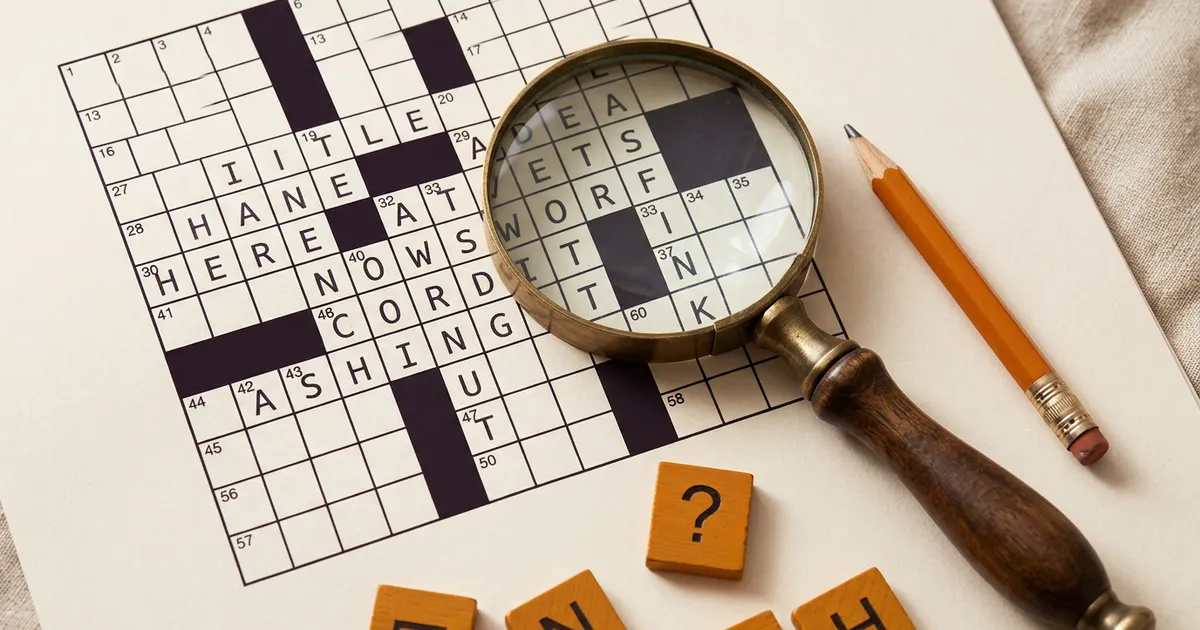
Short answer: no. A crossword you solve on your couch has no referee, no prize pool, and no opponent. The only person who can be cheated is you, and you get to decide what a satisfying solve looks like. Even the most traditional voices in the puzzle world take a permissive view: it is your puzzle, and however you choose to finish it is a legitimate way to solve.
And yet almost every solver has felt that little pang of guilt after peeking at an answer. This post is about where that feeling comes from, when help actually matters, and how we designed hint scoring in Grid Genius so that assistance is graded fairly instead of treated as a moral failing.
Where the guilt comes from
Crosswords grew up in newspapers, and the etiquette around them grew up in living rooms. For decades the only "hint" available was the dictionary on the shelf or the person across the table, so asking for help felt like a public confession. The puzzle also arrived with an answer key printed the next day, which framed anything short of an unaided solve as incomplete.
That culture never matched how people actually solve. Solvers have always used crossings as hints, skipped clues and returned to them, asked a spouse, or waited a day and let the answer surface in the shower. Every one of those is assistance. The dictionary just got a worse reputation because it was visible.
The honest position is that all solving exists on a spectrum of help, and the interesting question is not whether you used any, but how much thinking you still did yourself.
A better question: what do you want from the puzzle?
Different solvers open a crossword for different reasons, and the "rules" should follow the goal.
If you solve to relax, hints are simply a comfort feature. Getting stuck for twenty minutes on one obscure word is not relaxing, and abandoning a nearly finished grid feels worse than peeking. Take the hint, finish the puzzle, enjoy your evening.
If you solve to learn, hints are a study tool. The research on crosswords and brain health points at retrieval practice as the active ingredient: reaching for a word, struggling, and then getting confirmation. A hint that arrives after a genuine attempt is the textbook version of that loop.
If you solve to compete, help finally needs accounting. Leaderboards compare your solve against other people's, so a solve with five revealed words should not outrank a clean one. But the answer is scoring, not prohibition. Banning hints from ranked play just punishes honest players and rewards whoever quietly opens a search tab.
The hint ladder, from lightest to heaviest
Not all help is equal. Here is the spectrum most solvers climb, in order of how much of the work remains yours:
| Step | What it is | How much thinking stays yours |
|---|---|---|
| Crossings | Fill the words around the stuck one | All of it |
| Walk away | Let your brain work in the background | All of it |
| Rephrase the clue | Hear the clue said another way | Almost all |
| Reveal a letter | Confirm one square | Most |
| Reveal a word | Fill the whole entry | Little |
| Look up the answer | Search for it directly | None |
The first two steps are free in every crossword ever printed. The middle steps are where apps can genuinely improve on the dictionary era, and the beginner strategies in our solving guide cover how to use crossings well before you ever need the ladder's lower rungs.
The rephrase step deserves a special mention because it barely existed before AI. In Grid Genius, the Reword with AI hint generates a fresh clue for the same answer, the way a friend would put it differently rather than blurt out the word. You still make the connection yourself, which is why it sits so high on the ladder.
How Grid Genius scores hints
When we rebuilt our scoring system, we wanted it to reflect that ladder honestly. Treating a rephrased clue the same as revealing an entire word is neither fair nor accurate, so the penalties are graded:
- A clean solve keeps everything, including a perfect-solve bonus on top of your base score, time bonus, and streak bonus.
- Your first AI reword is free. It only forfeits the perfect bonus, because the solve was assisted, but it costs no points. Additional rewords cost a couple of points each, with a small cap.
- Revealing a letter costs more, and each revealed letter adds up, again with a cap.
- Revealing a whole word costs the most, since it charges you for every letter it fills.
- Every score has a floor, so one brutal corner can never zero out an otherwise good solve.
The result is a scoring system that matches intuition: solve without hints for the best score, reword when you are stuck and keep almost all of it, and reveal when you would rather finish than struggle. The legend under each clue shows this in the app, so the trade-off is never a surprise.
This matters most on the daily challenge, where streaks and leaderboards make solves comparable. Casual puzzles are still yours to solve however you like.
Hints that teach instead of tell
The reason we lean on AI rewords as the primary hint is educational, not just sporting. A traditional hint transfers an answer. A rephrased clue transfers understanding: you learn a second way to describe the same idea, which is precisely the connection-building that makes crosswords good for vocabulary in the first place.
Puzzle makers on Grid Genius can go one step further and write their own backup hints for each word, so a teacher or a parent can decide in advance what the "gentler version" of every clue should be. And because every account includes free AI crosswords, you can generate a puzzle on a topic you are studying and let the hint ladder do its work on material you actually want to remember.
When you should absolutely look it up
Sometimes the ladder should be skipped entirely. If the answer is a bit of crosswordese you have never met, an obscure river or a 1940s actress, no amount of staring will produce knowledge you do not have. Look it up, learn it, and move on. You will recognize it next time, which is the entire point.
Guilt-free rule of thumb: struggle first, then get help, then finish the puzzle. An abandoned crossword teaches nothing.
Frequently asked questions
Not in any meaningful sense. A crossword you solve alone is a game between you and the grid, and veteran puzzle editors have long said you should solve it however you enjoy. The only context where help needs rules is competition, and there the answer is scoring, not shame: ranked play should count assists rather than ban them.
Gently, and in proportion to how much they help. Your first AI reword of a clue is free and only costs the perfect-solve bonus. Additional rewords cost a couple of points each with a small cap. Revealing letters costs more, and revealing a whole word costs the most, with every penalty capped so one tough corner never ruins a solve.
A reword asks the AI to say the clue another way, so you still find the answer yourself. A reveal fills in a letter or a whole word for you. Rewords keep your score close to a clean solve because the thinking is still yours; reveals cost more because the grid did the work.
Used well, they do the opposite. Seeing a clue rephrased, or confirming one letter that unlocks three crossings, keeps you engaged with the puzzle instead of abandoning it. Research on retrieval practice suggests the struggle followed by the answer is exactly the pattern that makes words stick.
Whether you finish today's grid unaided or with three rewords and a revealed letter, you finished it. That counts.
Try Grid Genius FreeA real crossword on any topic.
AI-generated puzzles with smart hints that help you think, not just give away answers. Free to play, no sign-up required.